Gérard Jérôme Marchand – Chaplain at the Front
This post is also available in:
 Nederlands
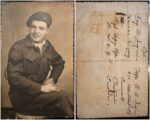
A colleague handed me a small bundle of wartime documents, photographs, loose papers, and handwritten notes. Among them was a portrait that immediately stood out. On the reverse, in careful French handwriting, it read: “Souvenir d’un aumônier militaire Canadien – G. Marchand.” A Canadian military chaplain.
Further research led to Gérard Jérôme Marchand (1904), a Roman Catholic priest from Québec. During the Second World War, he served as a chaplain in the Canadian Army, first with the Voltigeurs de Québec and later with the Régiment de Maisonneuve. From July 1944 to May 1945, he accompanied the regiment through France, Belgium, the Netherlands, and into Germany. As a padre, Marchand occupied a unique position. Unarmed, yet constantly near the front, he conducted services, comforted the wounded, and buried the dead, often under fire. His role was not only spiritual but deeply human, sustaining morale in the harshest conditions. For his service, he was appointed a Member of the Order of the British Empire (MBE).
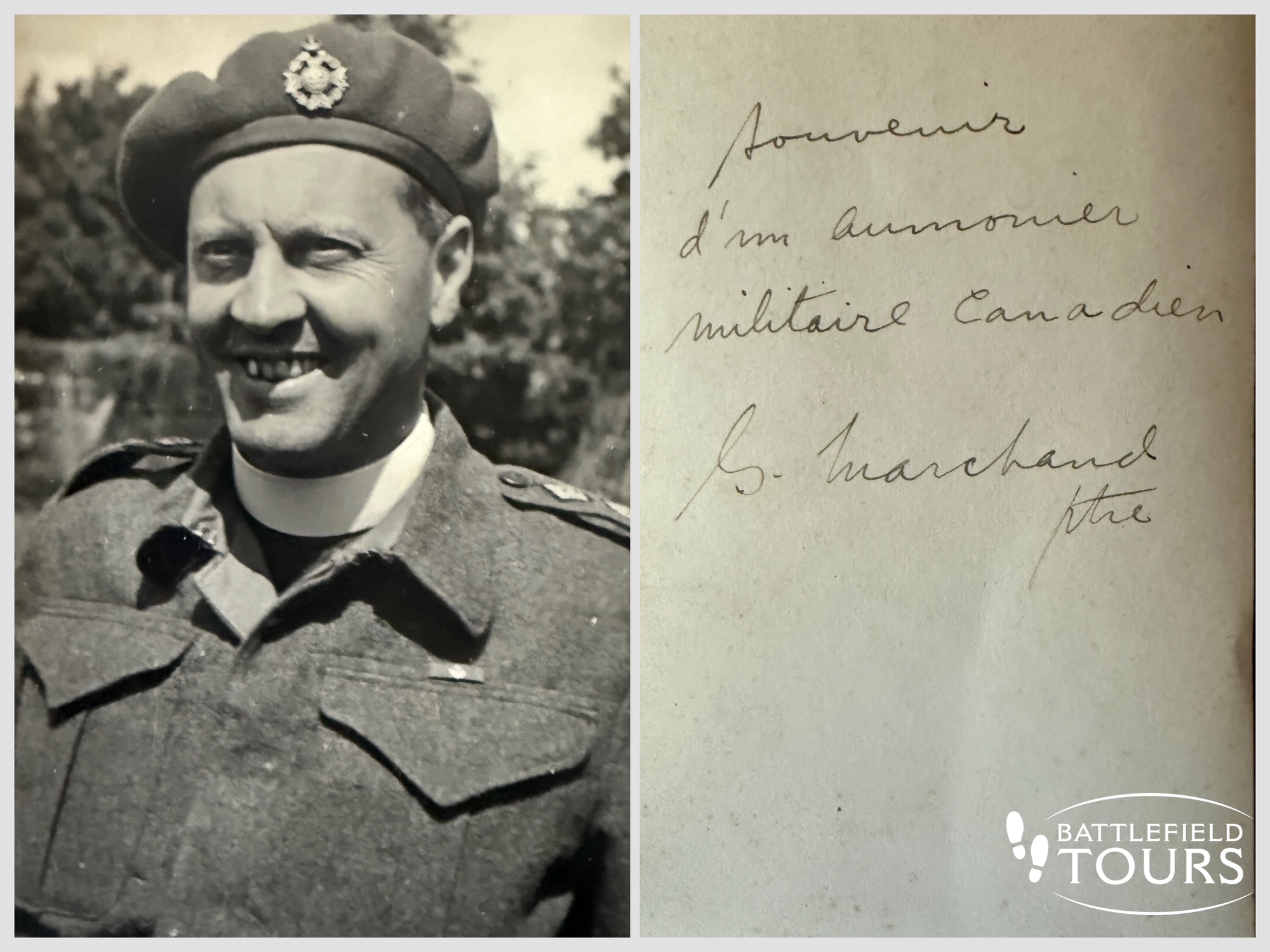
The photographic card of Gérard Jérôme Marchand, bearing on the reverse: “Souvenir d’un aumônier militaire Canadien – G. Marchand.” © Joël Stoppels
Royal Canadian Army Chaplain Corps
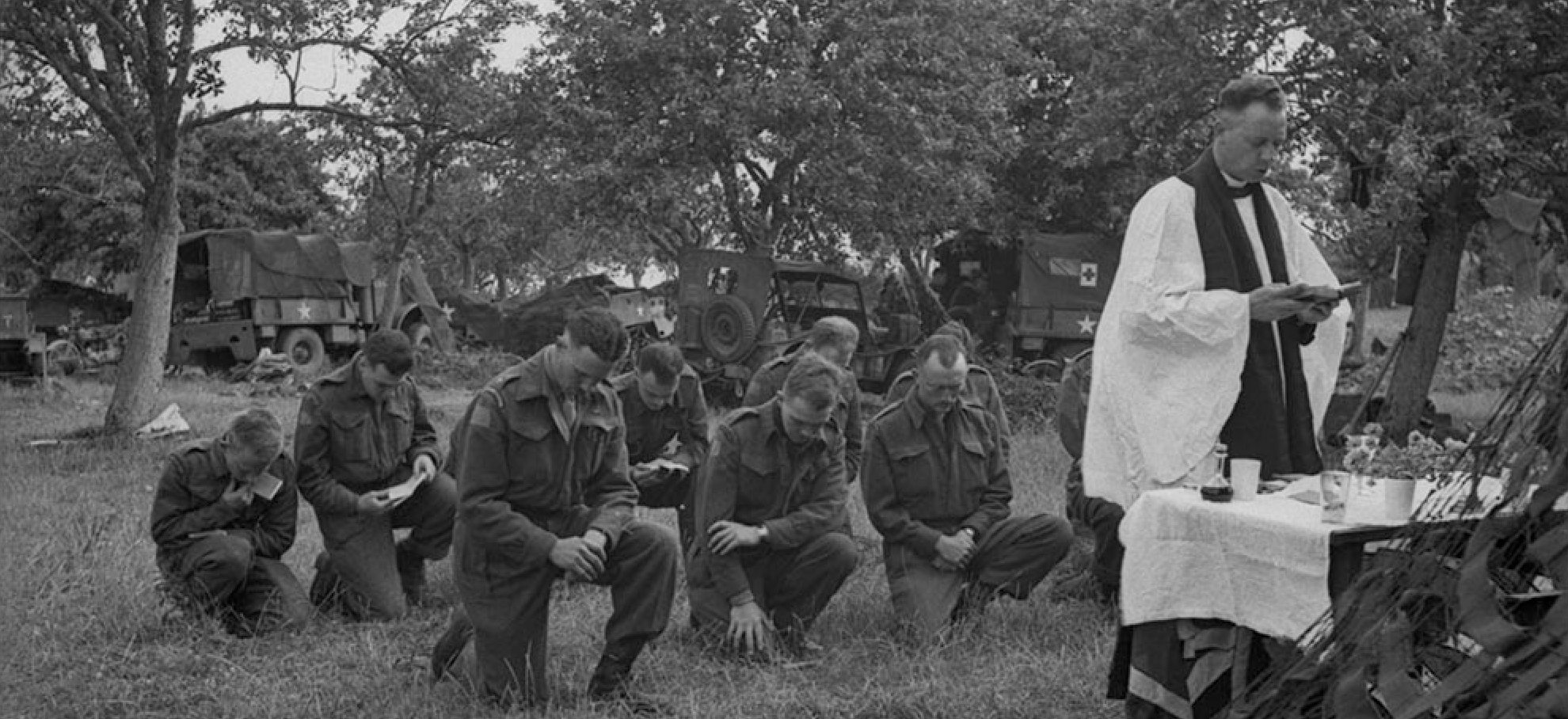
Military chaplains, often referred to as padres, fulfilled a crucial and multifaceted role within the Canadian Army during the Second World War. Although they were clergymen, their responsibilities extended far beyond conducting religious services. They served as confidants, caregivers, and moral anchors for soldiers under the most difficult conditions. Within the Royal Canadian Army Chaplain Corps, more than 1,200 chaplains served, representing a range of religious traditions. Their primary task was to safeguard the morale and spiritual well-being of the troops. In practice, this meant being present wherever they were needed: at the front, at aid posts, and in close proximity to combat. Chaplains were unarmed, yet they frequently found themselves in life-threatening situations. They assisted the wounded, sometimes administered first aid, and helped bring soldiers to safety under enemy fire. In many cases, they worked closely with medical personnel and were present where the fighting was most intense.
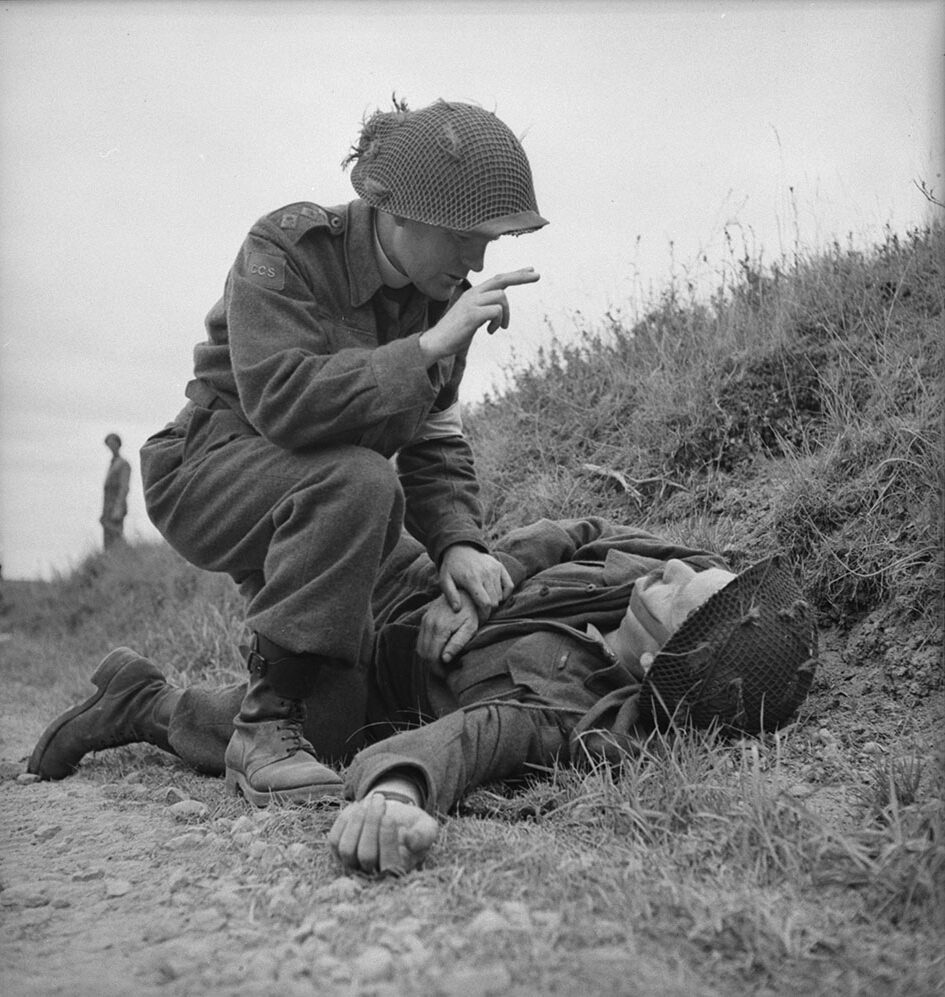
Chaplain H/Captain Robert Seaborn administers the last rites and grants absolution to a dying soldier. © Library and Archives Canada
What set them apart was their unique position within the military structure. They stood outside the normal hierarchy and were accessible to everyone, from enlisted men to officers. Soldiers could turn to them with concerns, fears, and personal problems, without formal barriers. Chaplains also played an important role in dealing with loss. They organized burials, identified the fallen, and often wrote letters to families. In the chaos of war, they provided structure, ritual, and human dignity—especially at moments when these were at risk of disappearing. Some chaplains distinguished themselves through exceptional courage. A well-known example is John Weir Foote, who during the failed Dieppe Raid in 1942 repeatedly rescued wounded soldiers under heavy fire and ultimately chose to remain behind as a prisoner of war in order to stay with his men. For his actions, he was awarded the Victoria Cross.
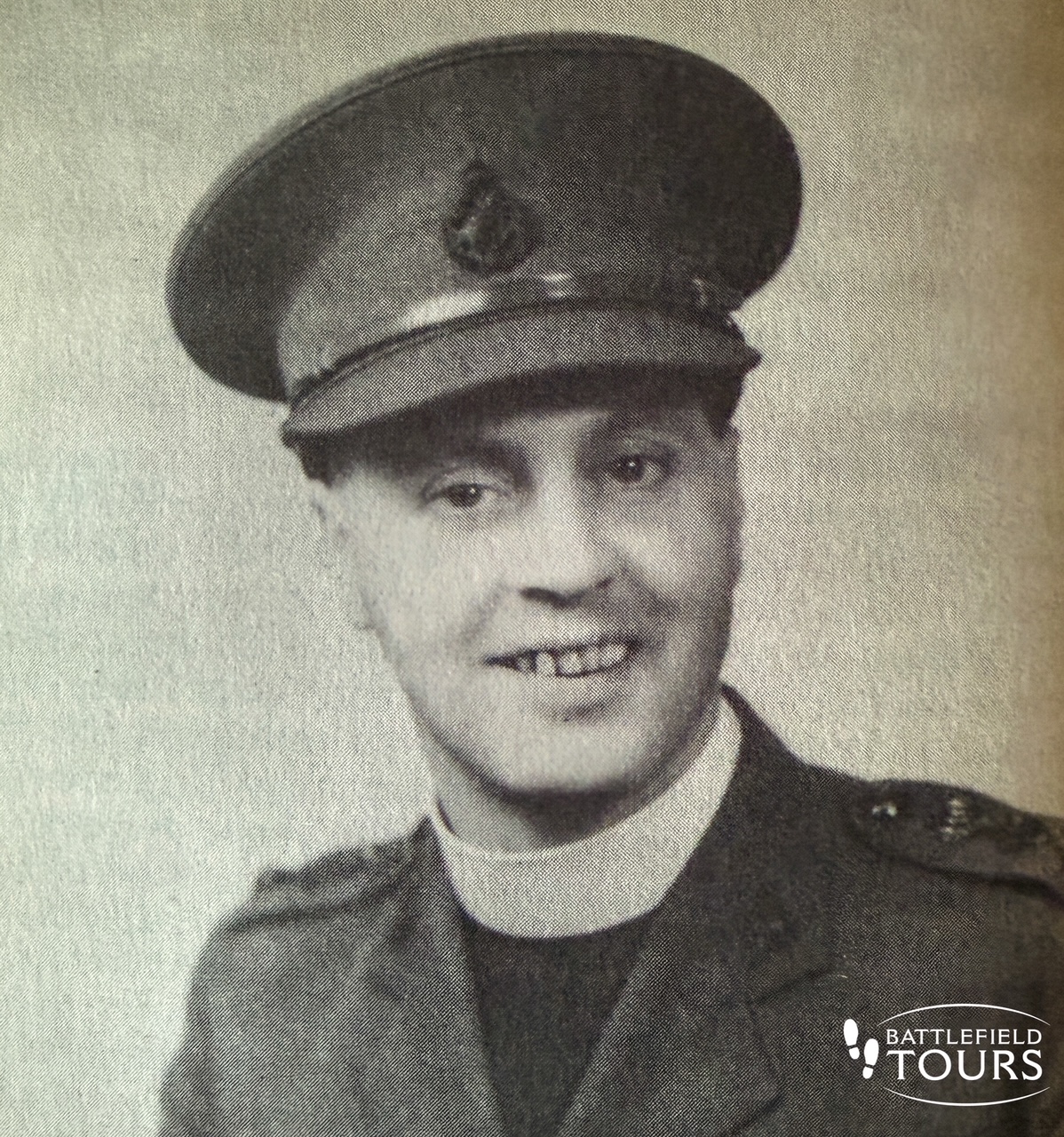
Gérard Jérôme Marchand. © Joël Stoppels
Le Régiment de Maisonneuve vers la victoire, 1944–1945
In the final years of his life, Gérard Jérôme Marchand recorded his experiences in Le Régiment de Maisonneuve vers la victoire, 1944–1945. His account is not a tactical history, but a personal testimony focused on the daily reality of soldiers in wartime. He described moments of fear, loss, and resilience, as well as the quiet duties of a chaplain: standing with the living and burying the dead. He did not live to see the book published. It appeared posthumously, becoming his final contribution—a lasting record of the men with whom he served. The photograph from the envelope is therefore more than just an image. It is a tangible reminder of a man who witnessed the war at close range, who moved with Canadian soldiers across Northwest Europe, and who ultimately ensured that their story would endure. What began as a simple envelope proved to contain something far more meaningful: the story of Gérard Marchand.
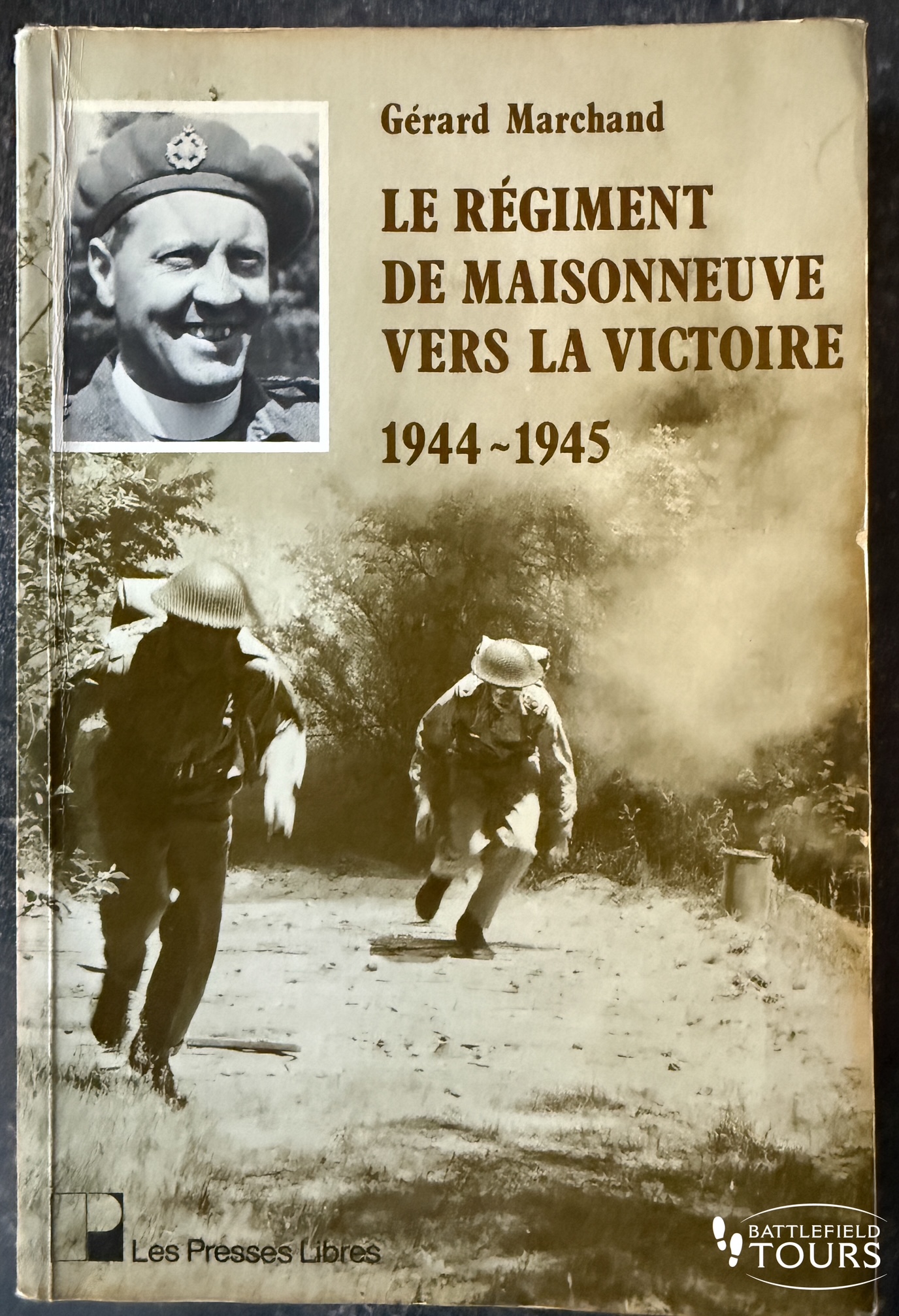
The book Le Régiment de Maisonneuve vers la victoire, 1944–1945, written by Gérard Jérôme Marchand. © Joël Stoppels